Dance Cardio When You Genuinely Feel Uncoordinated (Not Just Being Modest)
Quick Answer: Feeling uncoordinated in dance cardio is usually a pattern-recognition delay, not a permanent limitation — starting with slower-tempo, repetitive-pattern routines and giving yourself permission to simplify unfamiliar moves rather than trying to match every detail builds coordination faster than jumping into fast, complex choreography.
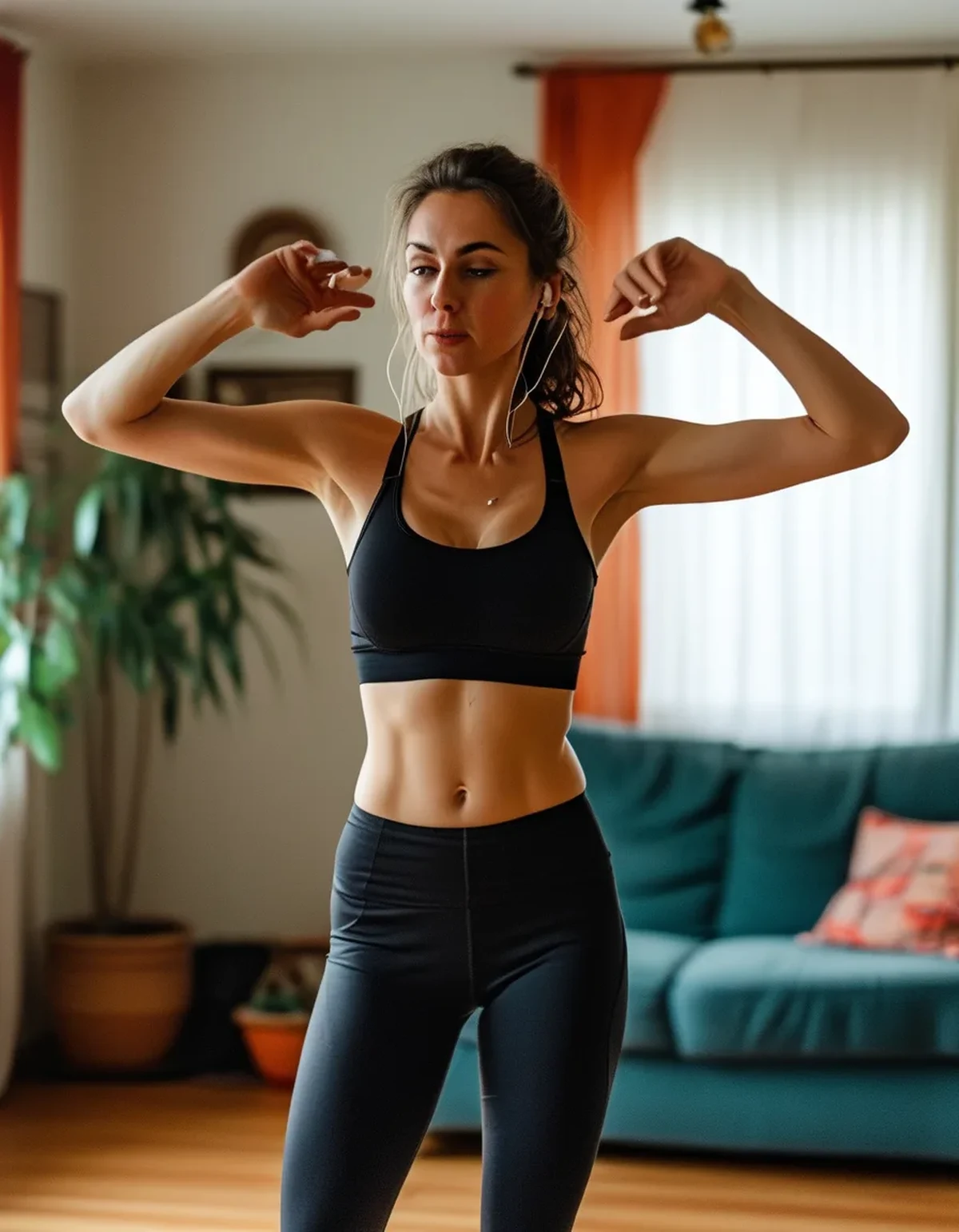
A lot of people rule out dance cardio entirely because early attempts feel clumsy and frustrating. That feeling is common, temporary, and doesn’t mean dance cardio isn’t for you.

Is feeling uncoordinated in dance cardio actually about coordination, or something else?
It’s often a pattern-recognition and processing-speed issue rather than a physical coordination limitation — your body may be entirely capable of the movements, but following new choreography in real time while an instructor moves ahead requires a specific skill that takes repeated practice to build, separate from general athleticism or coordination.
Why do slower-tempo routines help build this skill faster than jumping into fast ones?
A slower tempo gives your brain more processing time between movement cues, which lets the pattern-recognition skill develop without the added stress of also keeping up with speed. Building comfort with pattern-following at a manageable pace transfers to faster routines much better than struggling through fast routines from the start.
What does ‘simplifying’ a move actually look like in practice?
Simplifying means doing a smaller, lower-impact version of the general movement direction rather than trying to hit every specific detail of an instructor’s choreography — for example, stepping side to side in rhythm rather than attempting a full complex footwork pattern you haven’t learned yet. This keeps you moving with the music instead of stopping to figure out exact steps.
Myth vs Fact: Dance Cardio Coordination
Myth: Some people are just naturally uncoordinated and dance cardio isn’t for them. Fact: Coordination in following choreography is a trainable skill that improves with repeated, patient practice, not a fixed trait.
Myth: You need to match the instructor exactly for the workout to count. Fact: Simplified movement that keeps your heart rate elevated still provides genuine cardiovascular benefit.
Does repeating the same routine multiple times actually help, or is that just avoiding new challenges?
Repeating the same routine several times genuinely accelerates coordination development, since pattern-recognition improves specifically through repetition of the same sequence — this isn’t avoidance, it’s how the skill is built. Once a routine feels comfortable, moving to a new one continues building the broader skill.
FAQ: Dance Cardio for Uncoordinated Beginners, Answered
How many sessions before dance cardio starts feeling less overwhelming?
Most beginners notice meaningful improvement within 3-4 sessions of the same or similar-style routines.
Should beginners avoid mirrors during dance cardio?
Some beginners find mirrors distracting early on and do better focusing on the instructor or screen rather than self-monitoring in a mirror.
Is it normal to still feel behind the instructor even after weeks of practice?
Yes, especially with new or more complex routines — this is a normal part of continually challenging the coordination skill, not a sign you’re not improving.
TL;DR:
- Feeling uncoordinated is often a pattern-recognition delay, not a fixed limitation
- Slower-tempo routines build the underlying skill more effectively than fast ones
- Simplifying unfamiliar moves keeps you moving without needing to nail every detail
- Repeating the same routine several times genuinely accelerates improvement
If dance cardio has felt discouraging before, try the same slower routine three times this week before judging whether it’s for you.
Keep Reading
This article is for general informational and styling purposes only. Fit, sizing, and product availability may vary.