Dance Cardio Modifications for Bad Knees That Still Feel Like a Real Workout
Quick Answer: For sensitive knees, replacing jumps and pivots with low-impact versions (steps instead of hops, controlled weight shifts instead of quick pivots) while keeping the same music tempo and arm movements preserves most of dance cardio’s cardiovascular benefit and energy without the joint-loading impact that aggravates knee pain.
The cardiovascular and mood benefits of dance cardio come mostly from sustained movement and elevated heart rate, not specifically from jumping — which is good news for anyone modifying around knee pain.
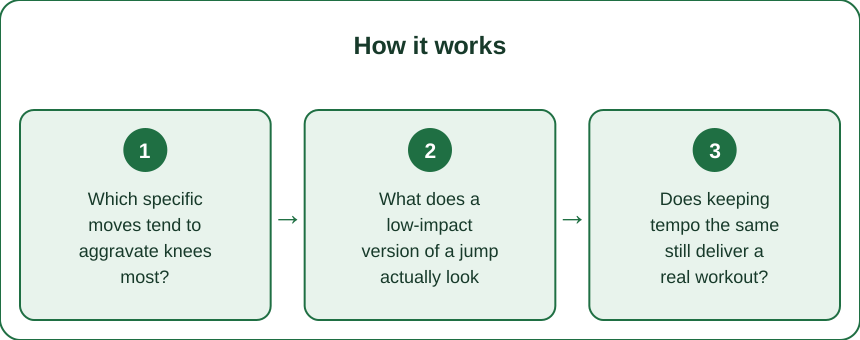
Which specific moves tend to aggravate knees most?
High-impact jumps, quick pivots on a planted foot, and deep lunging moves with a twisting knee tend to create the most joint stress — these are the moves worth modifying first, rather than needing to change the entire routine.
What does a low-impact version of a jump actually look like?
Instead of a jumping jack, a step-out-step-in with the same arm movement keeps the upper body cardio element and rhythm while removing the landing impact; instead of a pivot turn, a controlled step-turn (lifting the foot rather than twisting on a planted knee) reduces shear stress on the joint significantly.

Does keeping tempo the same still deliver a real workout?
Yes — heart rate elevation in dance cardio comes largely from sustained, continuous movement at tempo, so keeping the same music speed while modifying only the impact mechanics of specific moves generally preserves most of the calorie burn and cardiovascular benefit.
What Nobody Tells You About Knee Pain During vs. After
Mild discomfort during movement that resolves quickly afterward is different from pain that worsens or lingers after a session — the latter is a signal to modify further or pause dance cardio specifically until a professional evaluation, rather than pushing through repeatedly.
FAQ: Dance Cardio and Knee Pain Questions, Answered
Should I wear a knee brace during modified dance cardio?
A supportive brace can help some people feel more stable, but it’s not a substitute for addressing the underlying movement modifications — check with a physical therapist if pain persists despite modifications.
Is low-impact dance cardio still good for building lower body strength?
Somewhat, but low-impact modifications reduce some of the plyometric strength benefit; pairing modified dance cardio with separate strength training covers that gap.
How do I know if my knee pain is serious enough to stop entirely?
Sharp, sudden, or worsening pain, visible swelling, or instability are signs to stop and get evaluated rather than continuing to modify around it. This is general information, not medical advice.
TL;DR:
- Most of dance cardio’s cardio benefit comes from sustained movement, not jumping specifically
- Swapping jumps for steps and pivots for controlled turns cuts joint stress significantly
- Keeping the same tempo while modifying impact mechanics preserves most of the workout
- Pain that worsens or lingers after a session is a signal to modify further or get evaluated
This is general information, not medical advice — persistent or worsening knee pain deserves a professional look.
Keep Reading
This article is for general informational and styling purposes only. Fit, sizing, and product availability may vary.