Dance Cardio When You Genuinely Have Two Left Feet: What Actually Helps
Quick Answer: Feeling uncoordinated in dance cardio is usually a timing and pattern-recognition gap, not a physical limitation — it improves faster than people expect with slowed-down practice of isolated moves before attempting full-speed combinations.
Dance cardio classes move fast, combine several steps into sequences, and assume a baseline comfort with rhythm that not everyone starts with. Feeling lost isn’t a sign you can’t do this — it’s a sign the moves haven’t been broken down slowly enough yet.
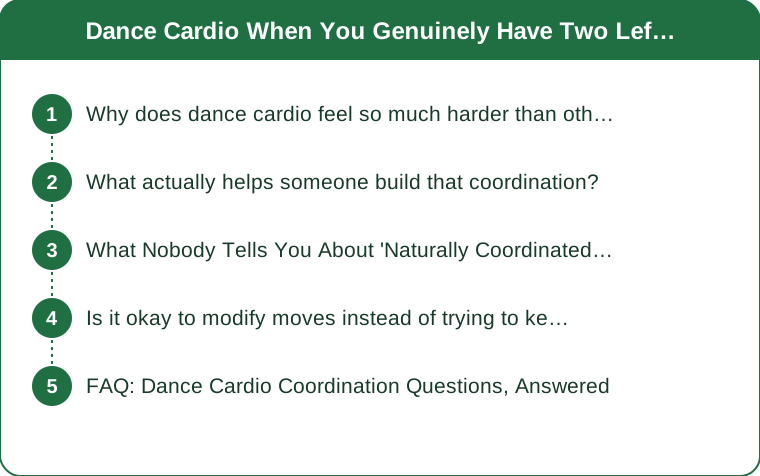
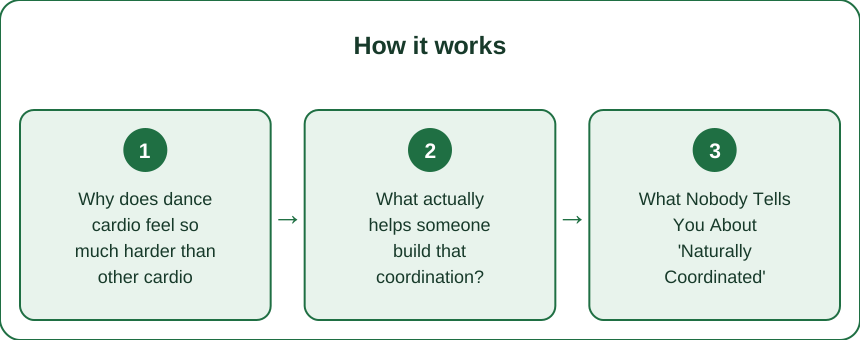
Why does dance cardio feel so much harder than other cardio formats?
Unlike running or cycling, dance cardio requires learning and executing a specific sequence in real time while also keeping pace with music — it’s a coordination task layered on top of a fitness task, which is a fundamentally different cognitive load than repetitive cardio movements.
This is exactly why experienced dancers make it look effortless: the sequence recognition has become automatic for them, the same way an experienced driver doesn’t consciously think through each step of shifting gears.
What actually helps someone build that coordination?
Practicing individual moves in isolation, slowly, before attempting them at full class speed is the single most effective fix — most people try to learn timing and choreography simultaneously in real time, which is genuinely harder than learning the steps first and adding speed after.
Many dance cardio apps and YouTube channels offer slowed-down tutorial versions specifically for this reason — using those before or alongside full-speed classes accelerates the coordination-building process significantly.

What Nobody Tells You About ‘Naturally Coordinated’ People
A lot of people who look naturally coordinated in dance cardio have simply done more cumulative hours of pattern-based movement, whether from dance, sports, or previous dance cardio, not some innate advantage that others lack entirely.
Coordination in this specific context is a trainable skill with a real learning curve, similar to learning an instrument — early sessions look and feel clumsy for nearly everyone, including people who later become the smooth, confident dancers others compare themselves to.
Is it okay to modify moves instead of trying to keep up exactly?
Yes, and it’s often the smarter path early on — simplifying footwork while still moving to the beat (marching in place instead of a complex step pattern, for example) keeps you engaged with the cardio benefit while your pattern-recognition catches up.
Modifying isn’t ‘doing it wrong’ — most instructors expect and design for a range of skill levels in any given class, even if it doesn’t always feel that way from the back row.
FAQ: Dance Cardio Coordination Questions, Answered
How long does it typically take to feel less lost in dance cardio classes?
Many people notice a real improvement within 4-6 consistent sessions, especially if some of that practice includes slowed-down tutorial versions rather than only full-speed live classes.
Is it better to repeat the same dance cardio routine or always try new ones as a beginner?
Repeating the same routine several times as a beginner builds real pattern familiarity faster than constantly starting over with new choreography — save routine variety for once you have a coordination baseline.
Does dance cardio still count as effective exercise if you’re mostly modifying moves?
Yes — modified movement that keeps you moving continuously to the beat still provides real cardiovascular benefit, even if it’s simpler than the full choreography being demonstrated.
TL;DR:
- Feeling uncoordinated is a timing/pattern gap, not a fixed trait — it’s genuinely trainable
- Practice moves slowly in isolation before attempting full-speed combinations
- ‘Naturally coordinated’ people usually just have more cumulative practice hours, not innate advantage
- Modifying moves is a legitimate strategy, not doing the workout wrong
Keep Reading
This article is for general informational and styling purposes only. Fit, sizing, and product availability may vary.